UAE Has Left the Group Chat
Read Receipts On, Quotas Off
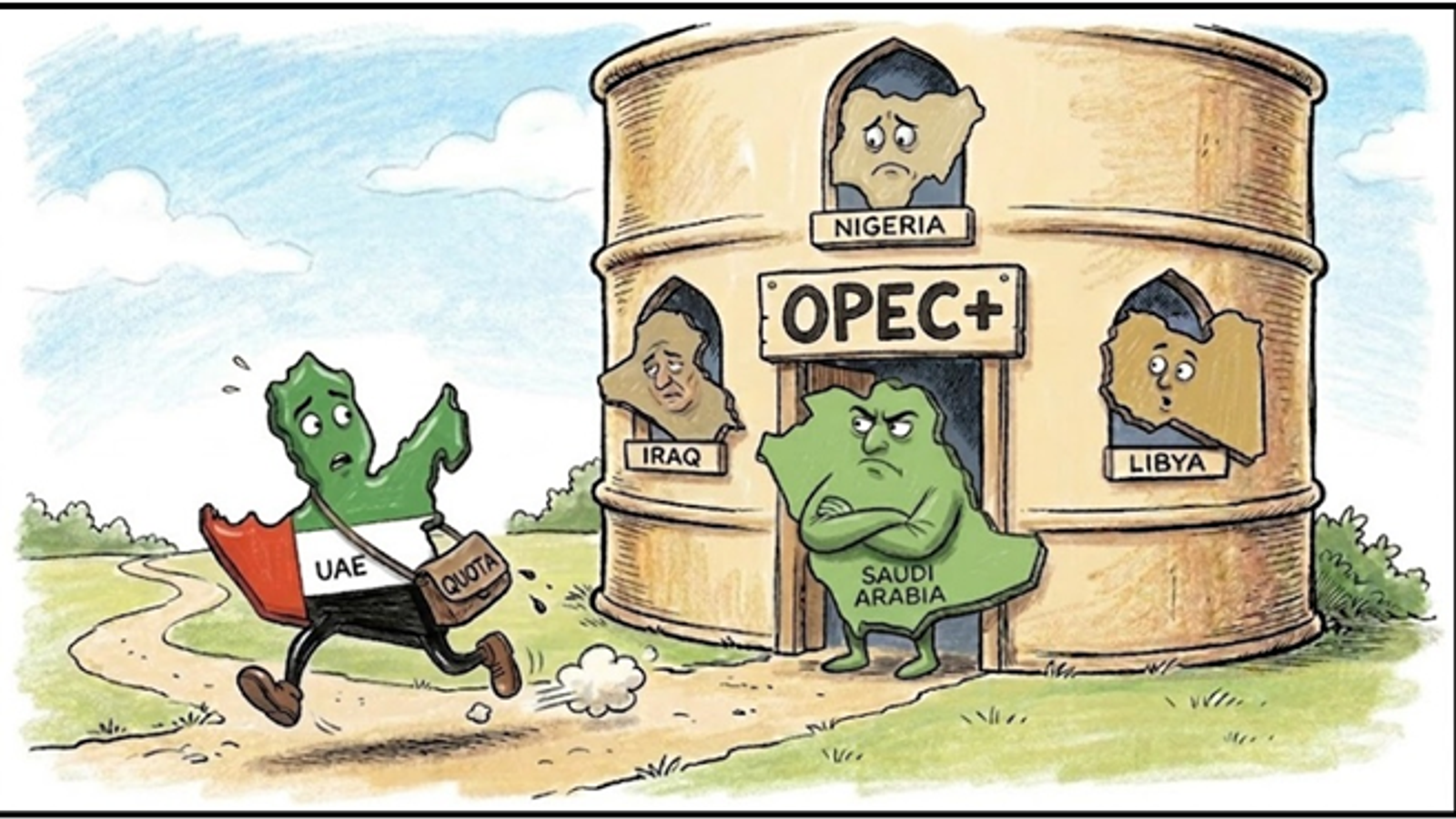
The United Arab Emirates just walked away from OPEC, effective May 1, 2026.Not drifted, not quietly stepped back. Walked. A member since 1967, the country is leaving the producer group that has shaped global oil for decades. In a world built on carefully worded official announcements and quiet consensus, this is not subtle. It is a message, and it lands.
Call it what it is: a calculated pivot toward national interest over collective discipline. For years, the UAE has poured billions into expanding its production capacity, pushing toward 5 million barrels per day. Real barrels, real infrastructure, real ambition. And yet much of it sat idle. OPEC+ quotas, heavily influenced by Saudi priorities, kept forcing Abu Dhabi to hold back. Invest, but do not produce. Build, but do not sell. The math worked for the group. It worked less well for the country writing the checks. Eventually, the patience ran out. When you are repeatedly asked to leave money on the table, you start questioning the table.
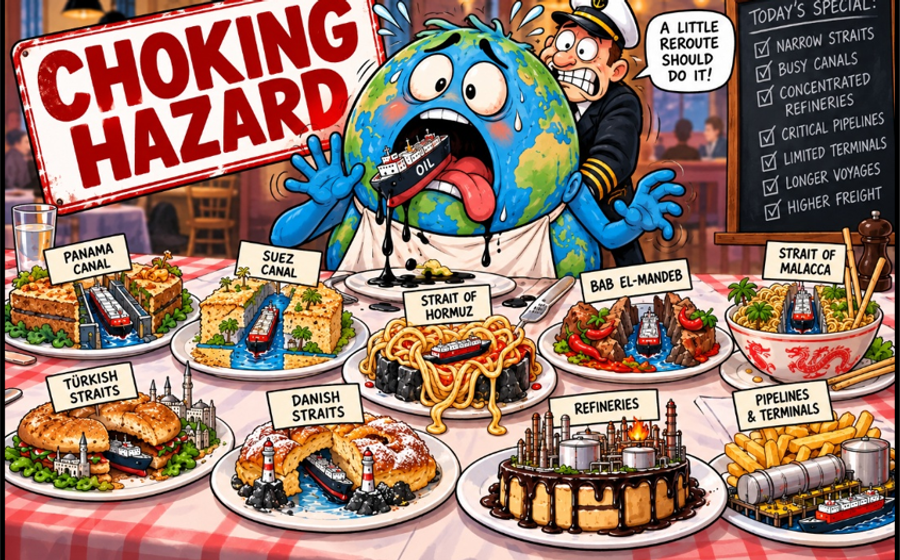
While this may seem sudden to many, others would argue it was inevitable. The UAE sits on some of the lowest-cost barrels in the world, while simultaneously racing to diversify its economy before the oil window narrows. Every barrel deferred today risks being worth less tomorrow. At some point, the equation flips. From Abu Dhabi’s perspective, it already has. It should not go unnoticed that Fujairah, the UAE’s primary export hub, sits outside the Strait of Hormuz. Barrels can bypass the current bottleneck entirely. It does not take the UAE out of the region or out of the war risk premium, but it does give it a structural edge in moments like this.
Outside OPEC+, the upside is obvious. More control, more flexibility, more barrels moving when it decides they should move. The revenue potential is real. Estimates point to tens of billions of dollars annually once expanded capacity is fully utilized, assuming prices hold at “reasonable” levels. That is not incremental, it’s transformational. But independence comes with consequences. Saudi Arabia is not just another producer. It is the anchor of the region and the center of gravity within OPEC+. This decision will not go unnoticed. Relations may cool. Coordination may fray. And if Saudi Arabia decides to defend market share aggressively, the market will feel it. Price wars are never theoretical until they are. Sometimes the ripple doesn’t stay contained.
For the broader oil market, this is bigger than one country leaving one group. OPEC+ has already shown signs of strain. Qatar left in 2019.Angola followed in 2024.Each exit chips away at cohesion and makes coordinated supply management harder. The UAE was not the largest producer, but it was disciplined, capable, and increasingly assertive. Losing that matters, especially now.
Because the rest of the market is not standing still. The Atlantic Basin is proving to be a serious alternative. U.S. production remains at record highs. Brazil continues to scale. Guyana keeps adding barrels at a remarkable pace. Supply growth is increasingly coming from outside OPEC+, and it is not slowing down. This reinforces a broader shift already underway. Oil is moving away from concentration and toward competition. Toward optionality. Toward a system that is less about control and more about flexibility.
That does not eliminate volatility. It likely increases it. More players, more decisions, more moving parts. Less central coordination. For consumers, that can be a benefit. More supply, more choice, more leverage. For producers, particularly higher-cost ones, it creates a more competitive landscape with tighter margins and less room for error.
None of this means OPEC disappears. Groups like them rarely do. They adapt, they shrink, they recalibrate. But the assumption of disciplined collective action is weakening. National priorities are reasserting themselves, as they tend to do when the stakes are this high and the timeline for fossil fuel dominance feels increasingly compressed.
The UAE is not stepping away from oil. It is stepping into control of its own strategy. In an industry defined by geology, capital, and timing, that is a rational move. The question now is whether this decision sticks and is not just a bargaining tool, and if the market rewards it or reminds everyone that even the best-laid strategies are subject to forces no one fully controls.
Sometimes the smartest move is to stop waiting for the convoy and chart your own course.